What a Red Tag Means: Inside Lifegear's Equipment Inspection Process
By Lifegear Team
2026-10-21
Introduction: Why Equipment Inspection Matters
A harness that looks fine can still fail. Webbing degrades from UV exposure, stitching weakens from repeated load cycles, hardware corrodes — none of which is always visible at a glance. This is why systematic inspection, not visual assumption, underpins fall protection and rescue equipment safety.
Fall protection and rescue equipment must be suitable for the conditions in which it is used. Regular checks help identify signs of wear, damage, deterioration, or other concerns that could affect equipment reliability. A consistent inspection process also helps ensure that equipment issues are addressed rather than overlooked during busy site operations.
Lifegear's Red-Tag and CAPA Process
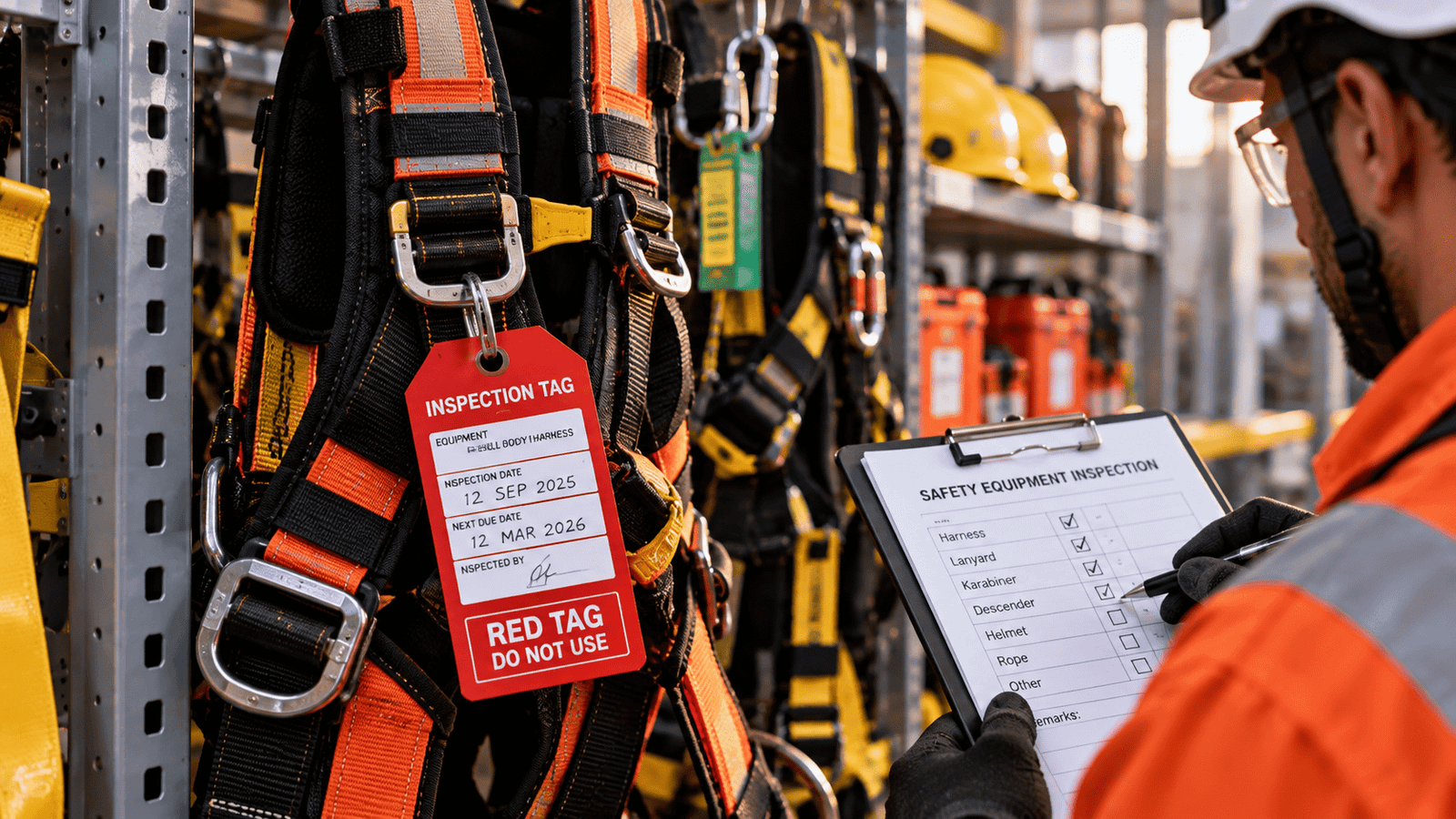
As part of its industrial rescue services, Lifegear's teams inspect all fall protection and rescue equipment used on-site. Equipment found faulty or improperly installed is red-tagged — pulled from active use — followed by a CAPA (Corrective and Preventive Action) process to resolve the issue before the equipment returns to service.
Red-tagging establishes a clear signal that equipment must not be used until the concern has been assessed and appropriately resolved. Removing questionable equipment from service helps prevent it from being selected for a task simply because it is available.
The CAPA process provides a structured way to address identified problems. Corrective action focuses on resolving the immediate issue, while preventive action considers how similar issues can be avoided in the future. Depending on the findings, this may involve further assessment, repair or replacement where permitted, installation corrections, changes to inspection practices, or additional training.
Equipment should only return to service after the relevant issue has been resolved and its suitability has been confirmed by an authorized, competent person in accordance with applicable procedures and manufacturer requirements.
Documenting Inspections Through RAP
This inspection discipline extends into daily operations through Lifegear's Rescue Site Assessment and Equipment Check List processes, both logged via the RAP application — turning "we checked the gear" into a documented, repeatable step rather than a one-time formality.
Documented inspections help create a clearer record of what was checked, what concerns were identified, and what action followed. Instead of relying entirely on verbal updates or paper records, teams can use structured records to support continuity across shifts and site activities.
Consistent documentation can also help supervisors review outstanding issues, follow up on corrective actions, and identify recurring equipment concerns. The value lies not only in recording that an inspection took place, but also in making the findings and subsequent actions traceable.
What an Effective Equipment Inspection Process Should Include
An effective process should be appropriate to the equipment type, the manufacturer's instructions, applicable standards, and the conditions in which the equipment is used.
Key considerations include:
- Inspection criteria: Define what needs to be checked for each equipment type and use the applicable manufacturer guidance.
- Clear identification: Make it possible to identify individual equipment items and associate them with the relevant inspection records.
- Defect reporting: Ensure workers and inspectors know how to report damage, deterioration, missing components, or installation concerns.
- Isolation of faulty equipment: Establish a clear procedure to prevent equipment suspected of being unsafe from returning to active use prematurely.
- Corrective action tracking: Record the action required, the person responsible, and the outcome of the follow-up.
- Return-to-service checks: Confirm that outstanding issues have been resolved and that the equipment is suitable for use before it is released.
- Record maintenance: Keep inspection and action records accessible to authorized personnel for operational follow-up and audits.
These steps should be adapted to the equipment, site requirements, and established safety procedures rather than treated as a universal checklist for every product.
Why Inspection Records Matter During Audits
Inspection records provide evidence that equipment checks are part of an established process. They can help an organization demonstrate when inspections took place, what findings were recorded, and how identified issues were handled.
When records are incomplete or difficult to retrieve, supervisors may struggle to establish the status of equipment or confirm whether outstanding actions have been completed. A structured documentation process makes it easier to review inspection history and identify unresolved concerns.
Digital records can support this process by organizing information in a searchable format. However, digital logging alone does not make equipment safe: inspection quality, competent assessment, appropriate corrective action, and compliance with relevant requirements remain essential.
From Inspection to Continuous Improvement
Equipment inspection is most effective when findings lead to action. Repeated defects, recurring installation issues, or missed inspection steps may indicate a need to review maintenance practices, storage conditions, training, or site procedures.
Tracking inspection findings and CAPA outcomes helps organizations look beyond individual defects and consider whether the underlying process needs improvement. Over time, this can support a more consistent approach to equipment management and operational safety.
For industrial sites using rescue and fall protection equipment, the objective is clear: identify concerns, remove unsuitable equipment from use, document the response, and verify that issues are resolved before equipment returns to service.
Ready to Take Action?
Get your equipment inspection process audited — talk to Lifegear.
References & Further Reading
- Lifegear — Industrial rescue services
- Lifegear — RAP rescue planning and site assessment
- Lifegear — TAD digital equipment inspection records