Confined Space Rescue 101: Why It's the Most Underrated Industrial Risk
By Lifegear Team
2026-09-26
Introduction: Why Confined Spaces Are So Dangerous
Confined spaces — tanks, silos, pipelines, pits — don't look dramatic. There's no visible height, no exposed machinery. That's exactly why they're underestimated, and why they remain one of the deadliest categories of industrial incident.
1. The Hidden Dangers of Confined Spaces
The danger compounds fast: oxygen deficiency, toxic gas buildup, and restricted egress mean a worker in distress often can't self-rescue, and an untrained would-be rescuer frequently becomes a second casualty.
2. Why Confined Space Rescue Requires Specialized Skills
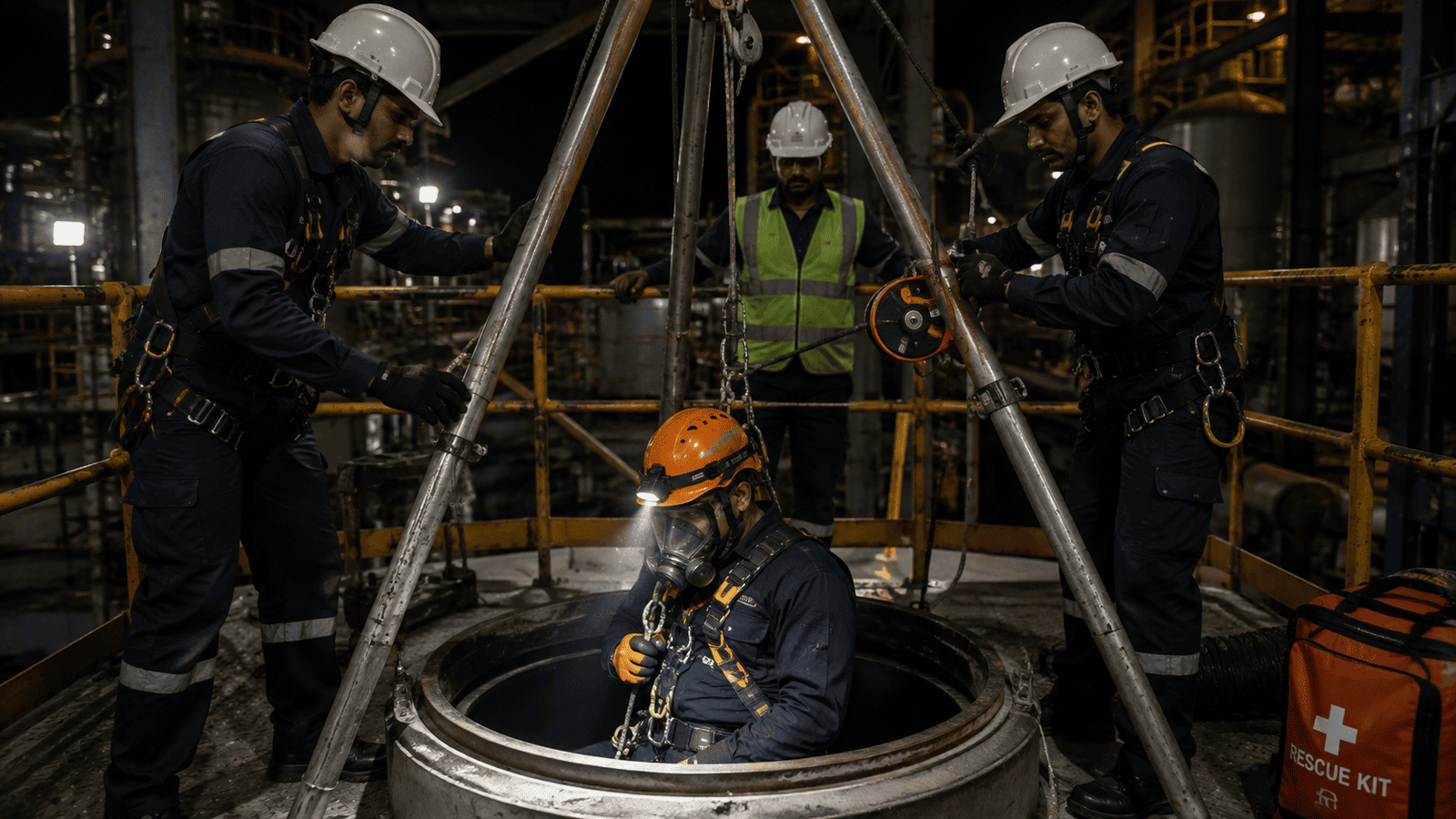
This is why confined space rescue demands specialized skills — atmospheric monitoring, ventilation setup, retrieval systems, and rescuer-specific PPE — not general first-response training.
3. The Role of Standby Rescue Teams
Lifegear's standby rescue teams are positioned specifically for this: pre-arranged with rescue gear during confined-space work, in continuous communication with the site attendant, ready to act within the narrow window confined-space emergencies allow.
4. Why Rescue Readiness Matters
It's a risk category that demands respect proportional to its danger, not its visibility.
Conclusion
Confined spaces — tanks, silos, pipelines, pits — don't look dramatic. There's no visible height, no exposed machinery. That's exactly why they're underestimated, and why they remain one of the deadliest categories of industrial incident.
The danger compounds fast: oxygen deficiency, toxic gas buildup, and restricted egress mean a worker in distress often can't self-rescue, and an untrained would-be rescuer frequently becomes a second casualty.
This is why confined space rescue demands specialized skills — atmospheric monitoring, ventilation setup, retrieval systems, and rescuer-specific PPE — not general first-response training.
Lifegear's standby rescue teams are positioned specifically for this: pre-arranged with rescue gear during confined-space work, in continuous communication with the site attendant, ready to act within the narrow window confined-space emergencies allow.
It's a risk category that demands respect proportional to its danger, not its visibility.
Ready to Take Action?
Get standby confined space rescue cover for your next shutdown — talk to Lifegear.
References & Further Reading
- Lifegear — Standby Rescue Services
- Confined Space Rescue
- Industrial Rescue Readiness