The 104-Hour Rescue: What the Chhattisgarh Borewell Operation Taught Us
By Lifegear Team
2026-09-17
Introduction: The 104-Hour Chhattisgarh Borewell Rescue
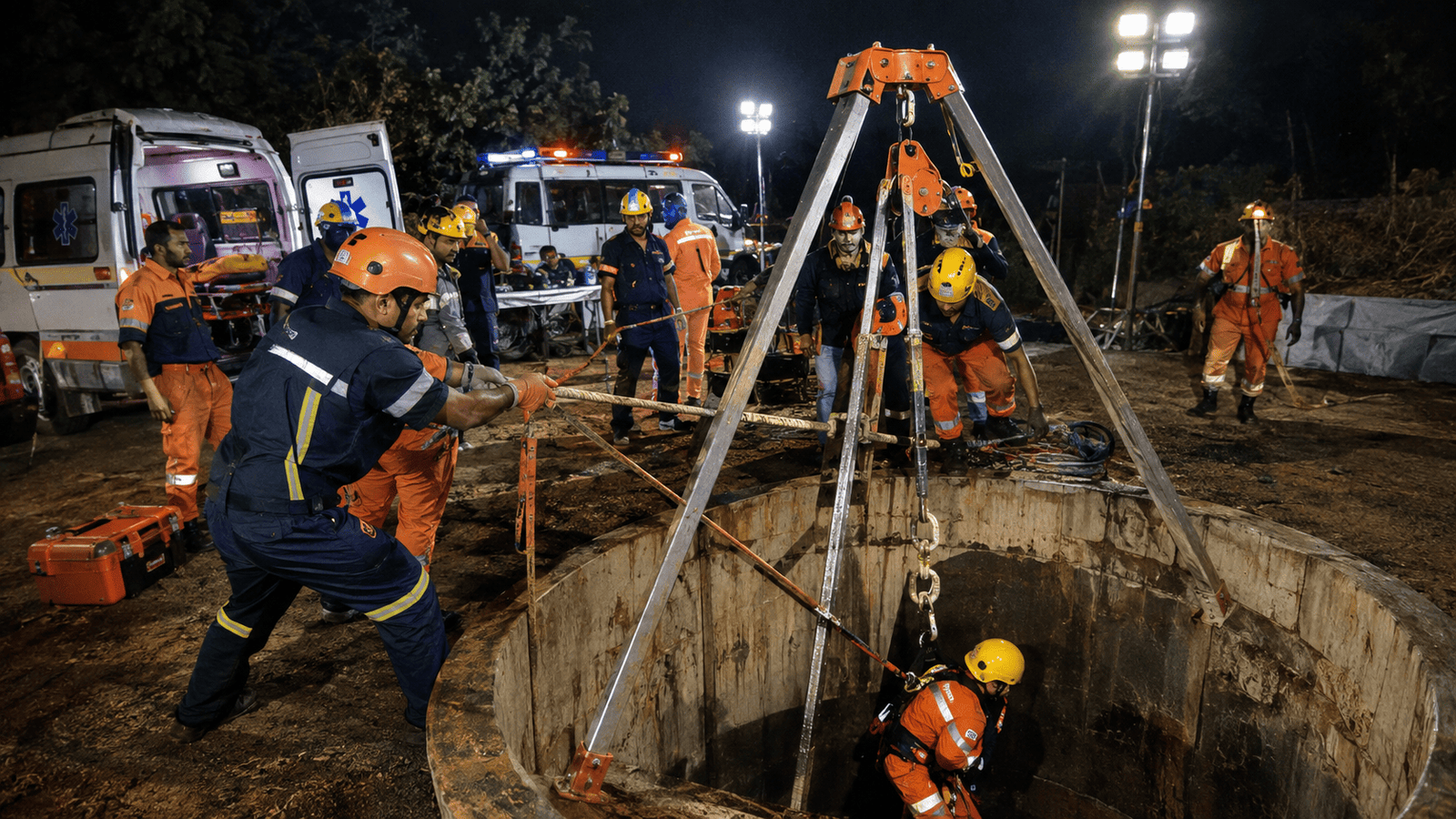
An 11-year-old boy fell into an 80-foot-deep borewell in Janjgir Champa district, Chhattisgarh. What followed was a 104-hour operation involving roughly 500 personnel — NDRF, the Indian Army, and the Lifegear-Pentasafe rescue team, mobilized from 80 km away with rope rescue devices and ventilation equipment.
Operations like this reveal what "rescue readiness" actually requires: not just trained people, but pre-positioned equipment, rapid mobilization capability, and coordination across multiple agencies working the same site simultaneously.
1. What the Rescue Operation Demonstrated
The rescue succeeded, and the boy was recovered safely — a moment publicly acknowledged by the Chhattisgarh Chief Minister.
But the operation also demonstrated the importance of having trained rescue personnel and the necessary equipment available when an emergency occurs.
2. Why Pre-Positioned Equipment Matters
Rescue readiness is not only about having trained people.
It also requires pre-positioned equipment that can be deployed when needed.
The Lifegear-Pentasafe rescue team was mobilized from 80 km away with rope rescue devices and ventilation equipment, demonstrating the importance of having appropriate rescue resources available for emergency operations.
3. The Importance of Rapid Mobilization
Emergency situations can require resources to reach the incident location quickly.
In this operation, the Lifegear-Pentasafe rescue team was mobilized from 80 km away.
This highlights why rescue infrastructure needs to include not only trained personnel, but also the capability to rapidly mobilize the right equipment to the right location.
4. Coordination Across Multiple Agencies
The 104-hour operation involved roughly 500 personnel, including NDRF, the Indian Army, and the Lifegear-Pentasafe rescue team.
Operations like this reveal what "rescue readiness" actually requires: coordination across multiple agencies working the same site simultaneously.
5. Rescue Capability Has to Exist Before the Emergency
But the deeper lesson for industrial and civic safety planners is about infrastructure: rescue capability that exists only on paper is not rescue capability.
It has to be staged, equipped, and drilled long before it's needed.
Preparedness isn't measured in intent — it's measured in how fast the right equipment reaches the right place.
Conclusion
The Chhattisgarh borewell rescue operation shows what "rescue readiness" actually requires: not just trained people, but pre-positioned equipment, rapid mobilization capability, and coordination across multiple agencies working the same site simultaneously.
The rescue succeeded, and the boy was recovered safely.
For industrial and civic safety planners, the deeper lesson is about infrastructure.
Rescue capability that exists only on paper is not rescue capability. It has to be staged, equipped, and drilled long before it's needed.
Preparedness isn't measured in intent — it's measured in how fast the right equipment reaches the right place.
Ready to Take Action?
Build rescue readiness before you need it.
- Pre-position the right rescue equipment
- Build rapid mobilization capability
- Train rescue personnel
- Coordinate across multiple agencies
- Stage and drill rescue operations before an emergency occurs
Build rescue readiness before you need it — see Lifegear's rescue services.